The quiet
Not silence — there is talking, and pouring, and someone always sweeping something up. But a room of young children genuinely absorbed in what they are doing.
Home / Philosophy
Montessori is more than a hundred years old and still ahead of its time. Here is what it looks like in a real classroom — and why we built our school this way.
Maria Montessori started by watching children rather than theorizing about them. What she noticed still surprises adults: given real work, real tools, and enough time, young children do not need to be entertained or pushed. They choose the hard thing. They repeat it twenty times, not to finish it, but to master it.
So our job is not to fill your child up. It is to prepare a room where they can build themselves. Everything else follows from that.
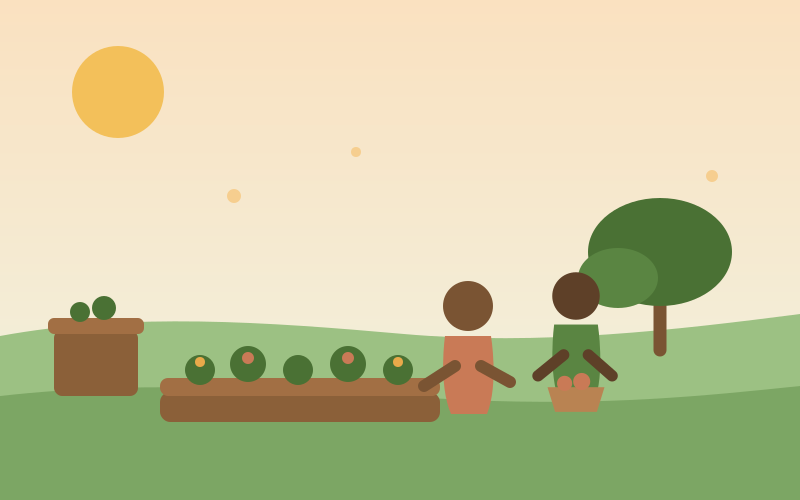
Children are outdoors here every day, in almost any weather. They plant seeds, water them, watch some fail, and harvest the rest. They turn the compost and find worms in it.
Being outside is not a break from what we are learning indoors — it is an extension of the same engaged work cycle. Gardening teaches exactly what Montessori practical life teaches, patience and sequence and care, and it teaches it in soil, which children never forget.
Low open shelves, materials arranged simple to complex, everything child-sized and real. No teacher’s desk at the front, no wall of plastic, no clutter.
Each material teaches one thing and shows the child their own mistake, so they can fix it themselves. That is the difference between a child who looks for approval and a child who looks for understanding.
What we build on top of that is collaborative. Traditional Montessori materials and concepts sit alongside the shared, question-driven work that STEM learning runs on — children thinking out loud together and testing each other’s ideas. And we document as we go, in notes, photographs and the children’s own work, because documentation is what reveals the true nature of what a child understands and notices. It is also what we show you.
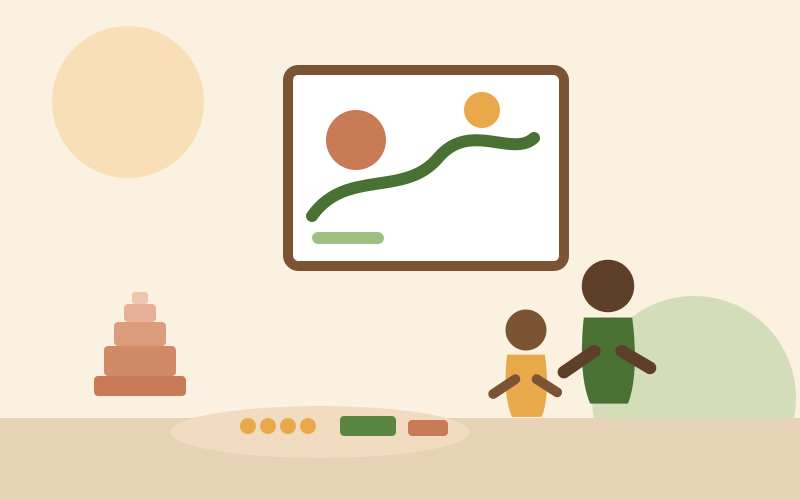
We borrow one idea from Reggio Emilia: children have a hundred ways to show what they understand. Painting, building, sculpting, and storytelling all count as thinking.
So a question does not end when the lesson does. Children come back to it over days and weeks, and the classroom keeps a visible record of what they are working out.
That is what an emergent curriculum means here: the guides watch what the children are genuinely chasing and build the next weeks around it. Observing and facilitating is the active work of the job, not the quiet part of it.
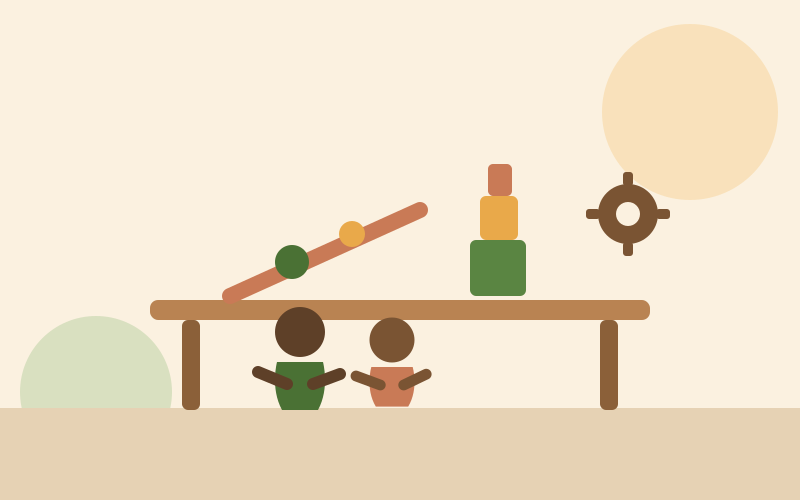
Math and science start in the hands, not on a worksheet. Children measure water for the garden, balance blocks until the tower holds, and sort leaves by size and shape.
They build ramps and change the slope to see what happens. The point is not big words. The point is learning early that you can answer a question by trying something.
Our classrooms span three years on purpose. Younger children learn how the room works by watching older ones. Older children learn by teaching, which is the hardest kind of knowing there is.
It also means a child who is ahead in math and behind in reading is not labeled either way. They simply work where they are.
You are part of this school, not a customer of it. We hold parent evenings, garden mornings, and seasonal gatherings, and the children lead a service project each term.
You will hear from us regularly — classroom updates through the week, so you know what your child has been absorbed in rather than guessing from a one-word answer at dinner. And there are real openings to be involved: garden mornings, seasonal gatherings, and the service project the children lead each term.
You are welcome to come and watch your child’s classroom once the year is underway. Most parents find it the most useful hour they spend with us.
“Help me do it myself” is not a phase to get through. It is the whole point.
Three things visitors see first, and that take us longest to build.
Not silence — there is talking, and pouring, and someone always sweeping something up. But a room of young children genuinely absorbed in what they are doing.
The morning is one long work cycle. No bells, no rotating stations, no calling the room to attention because it is 10:15.
Pouring their own drinks, wiping their own spills, fastening their own coats — every time, even when an adult could do it faster.
There are no tests, grades, or sticker charts. Rewards teach a child to work for the adult, and we want them working for themselves.
Instead we document — what your child has been shown, what they have mastered, where they settle and where they steer clear. It builds into a portfolio of their work and their thinking, which we walk you through in conferences and you can ask to see any time.
You do not need to build a classroom at home, either. A few things travel well: letting your child dress themselves even when it takes eleven minutes, keeping a few good toys on a low shelf instead of forty in a bin, giving them a real job in the kitchen. We run parent evenings on exactly this.
Visits take about half an hour. Bring your child — we would love to meet them.